Why Combines Sit in Line While Grain Spoils in the Field
There's one problem farmers bring up every harvest season, yet few ever solve for good: a combine fills up, and there's nowhere to send the grain. The trailer's busy, there's a queue at the grain store, and while logistics get sorted out, grain quality drops right in front of you. Sound familiar?
What Actually Eats Into Profit During Harvest
Strip away the usual excuses and you'll find a whole string of problems that farms have simply learnt to live with:
Combines sit idle waiting for a free trailer or an open slot at the grain store - and every minute of downtime is lost harvesting time on days when the weather actually cooperates. Delays before unloading hit grain quality directly: it sits, heats up, moisture shifts. Uncleaned grain gets hauled to the grain store - fuel and driver time spent moving straw and chaff along with the actual crop.
Add to that no on-site quality control (moisture and cleanliness only get checked at the grain store, when it's already too late to change anything), receiving capacity tied to a single fixed location, and permanent structures that take years to pay off - and it becomes clear why harvest logistics stay the weakest link even in otherwise well-run operations.
A Solution That Simply Drives Into the Field
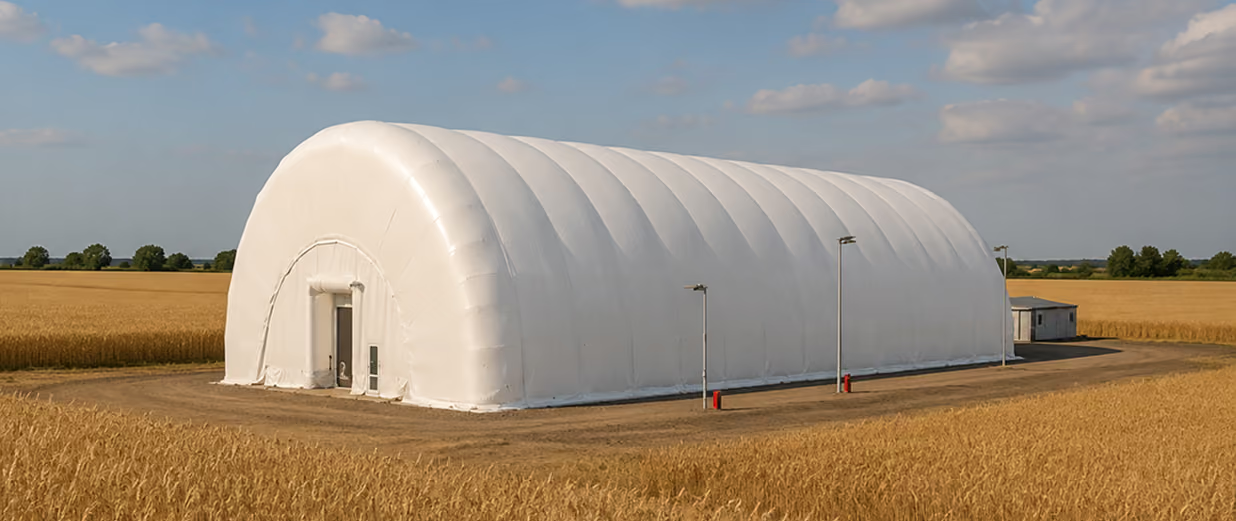
Airwallon came up with an idea that's fairly obvious, yet rarely gets built: instead of hauling grain to a fixed receiving point, bring the receiving point to the field. The Harvest Hub - a mobile receiving hub - sets up right next to the field being harvested and takes grain straight from the combines, cutting queues and extra trips. Its hangar is an inflatable arch structure - no steel frame required.
The result: 80–100 tonnes of receiving capacity and minimal downtime for combines, which keep harvesting.
What's Actually Inside the Hangar
Under the white inflatable arch sits a full processing line, not just a covered yard:
An 80–100 tonne receiving hopper
grain from combines unloads fast, with no extra equipment needed
A cleaning machine
that removes impurities - straw, dust, large debris - typically 2–5% of the load by weight
A lab with a moisture meter and scales
sampling and quality control happen on site, not after the fact at the grain store
A buffer hopper
holding 60–100 tonnes to stockpile grain before it is dispatched
Fast lorry loading
with a continuous flow, meaning fewer runs overall
In other words, the hub doesn't just receive grain - it cleans and checks it straight away, so what heads to the grain store is already a clean, verified batch, not a mix of grain and chaff.
The Structure: Numbers for the Detail-Oriented
The hangar is built as a true arch out of inflatable PVC-fabric elements - sealed, durable, built to last. Each arch segment is about 2 metres in diameter, and together they form a space measuring:
width - 15 m
length - 20 m
height - 7.2 m
area - 300 m²
volume - approx. 1,700 m³
The structure is wind-resistant, built for year-round use, and goes up without a crane or heavy equipment - just the inflatable arch, no steel frame anywhere.
What This Means for a Farm's Budget
The savings come from a few very tangible things. Lower transport costs, since grain gets cleaned right in the field instead of being hauled as dead weight mixed with straw and chaff. Fewer trips to the grain store - less fuel, fewer driver-hours per run. Batches come out higher quality, so they don't get hit with price deductions for moisture or debris at delivery.
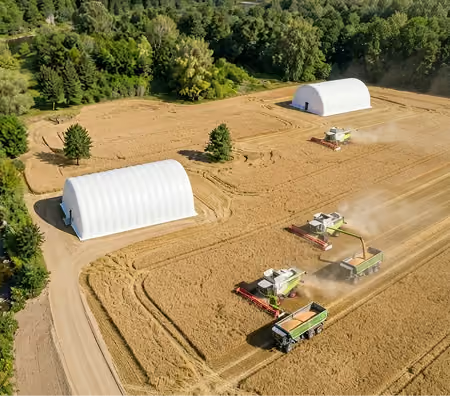
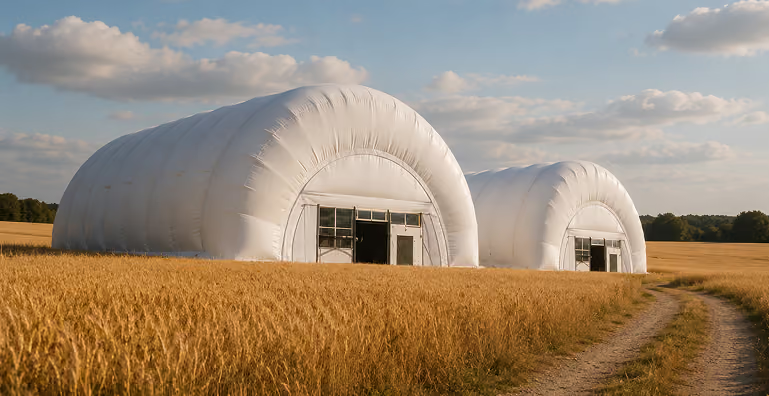
And there's a separate advantage: flexibility. One unit can move from field to field throughout the season, instead of a farm building a separate fixed point for every field. And compared with a permanent grain store, investing in a Harvest Hub costs just a fraction as much - which, by Airwallon's estimate, means a payback period of 1–2 seasons.
Where This Hub Can Grow From Here
The base setup already covers receiving, cleaning, quality control, and buffer storage, but Airwallon has built in room to expand: a mobile grain dryer, an additional hopper, grading, and a lorry weighbridge right on site. So one unit can gradually turn into a full field logistics hub, rather than staying a one-season fix.
The short version: instead of a farm bending its harvest logistics around one fixed grain store, the Harvest Hub bends around the field - showing up and solving the classic problem of queues and lost quality at the root.